Attack Path Analysis: How Exposures Become Real Attack Paths
 Nilesh Tank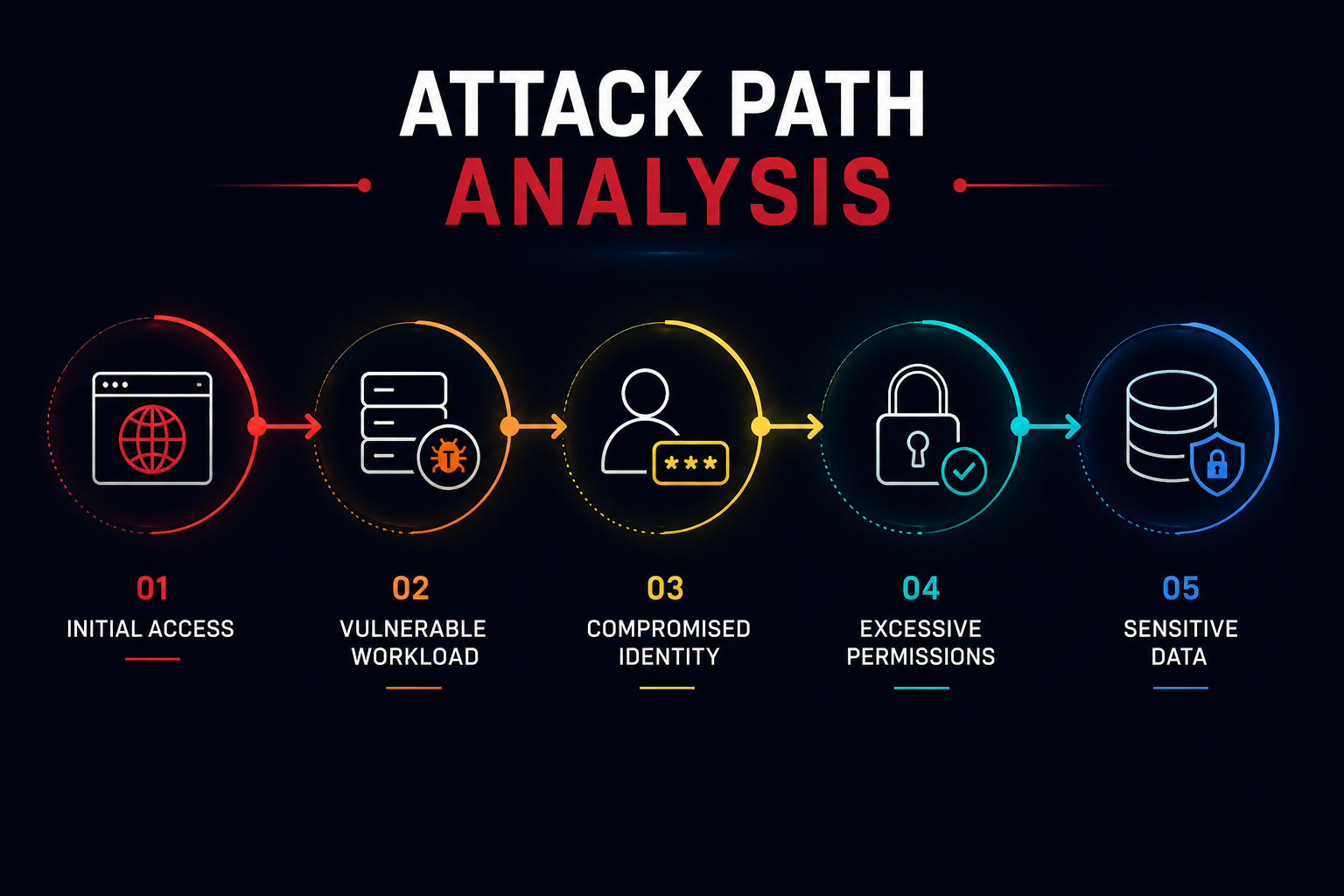
A vulnerability by itself does not always tell a security team how dangerous an exposure really is.
A medium-severity vulnerability on an isolated system may deserve less attention than a similar vulnerability on an internet-facing server with access to sensitive data.
The difference is context.
Attack path analysis helps security teams understand how individual weaknesses can connect to form a realistic route an attacker could use to reach a valuable target.
What Is Attack Path Analysis?
Attack path analysis examines the relationships between assets, vulnerabilities, identities, permissions, configurations, and network access.
Instead of looking at security findings separately, it asks:
If an attacker gained access here, where could they go next?
For example, an exposed application may contain a vulnerability. That application could connect to a service account with excessive permissions. The account may then have access to a sensitive database.
Each issue matters on its own. Together, they create a potential attack path.
Attack path analysis is therefore closely connected to continuous threat exposure management, where security teams continuously identify, validate, prioritize, and reduce meaningful exposure.
Why Individual Findings Can Be Misleading
Security teams often work with large volumes of findings:
- Vulnerabilities
- Misconfigured cloud resources
- Excessive permissions
- Exposed services
- Weak access controls
- Unpatched systems
The challenge is deciding what deserves attention first.
A critical vulnerability does not automatically represent the highest business risk. Its importance can change depending on where the affected asset sits in the environment and what it can access.
For example, a vulnerable internal server with no sensitive connections may present less immediate risk than a moderately vulnerable internet-facing workload connected to privileged credentials.
That is why attack surface provides important context for attack path analysis. Security teams need to understand what assets exist and how they are exposed before they can understand how those exposures connect.
How an Attack Path Can Form
A realistic attack path might look like this:
Internet-facing application → Vulnerable workload → Compromised identity → Excessive permissions → Sensitive database
The attacker does not need to exploit every weakness in the environment.
They only need a workable route toward something valuable.
This makes relationships between findings more important than simply counting vulnerabilities.
A Practical Enterprise Example
Consider an organization with a customer-facing application hosted in the cloud.
A security assessment identifies a vulnerable workload. The workload also has access to a service account with broader permissions than required. That account can reach a database containing sensitive business information.
Looking at the findings separately might produce three remediation tasks.
Looking at them as a connected path changes the priority.
The security team can now see that fixing the workload vulnerability and reducing the identity's permissions may significantly disrupt a potential route to the database.
What Security Teams Should Look For
Effective attack path analysis should help answer practical questions:
- Which exposed assets can an attacker reach?
- What identities or credentials are connected to those assets?
- What permissions do those identities have?
- Which vulnerabilities can provide an entry point?
- What sensitive systems could be reached?
- Which attack paths represent the greatest business risk?
The goal is not to create another long list of security findings. It is to identify the paths that matter most.
How Attack Path Analysis Improves Prioritization
Without attack-path context, teams may prioritize based mainly on severity scores.
With attack-path context, they can consider exposure, exploitability, identity privileges, asset criticality, and potential impact together.
This helps security teams focus limited remediation resources on weaknesses that could actually contribute to compromise.
Conclusion
Attack path analysis changes the question from "What vulnerabilities do we have?" to "How could an attacker use what we have against us?"
That shift matters because real attacks rarely depend on one isolated weakness. They often involve a sequence of exposures, permissions, and access opportunities.
By understanding those relationships, security teams can identify meaningful attack paths, prioritize remediation more effectively, and reduce the routes attackers could use to reach critical assets.
About the Author
Nilesh Tank
Nilesh Tank is a VAPT Lead focused on penetration testing, vulnerability management, attack simulation, and offensive security. His expertise spans identifying security weaknesses and improving organizational security posture through proactive testing.
Is your Cyber Security 2026-Ready?
Stop ransomware and mitigate risks before they happen. Get a free architecture audit from our frontline security analysts.
Schedule a Strategy Call