Asset Visibility in Cybersecurity: Knowing What You Need to Protect
 Nilesh Tank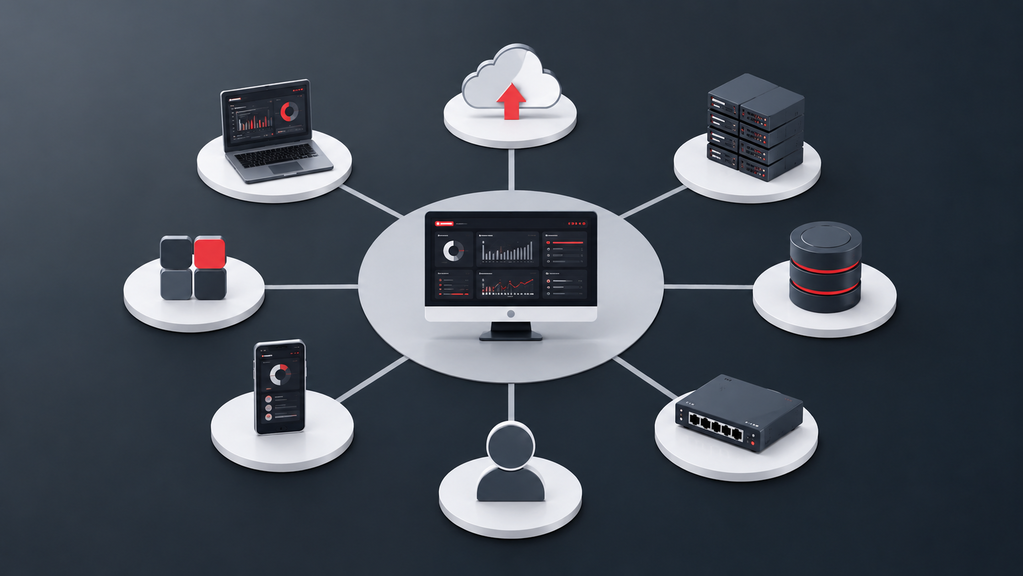
A security team can have excellent vulnerability scanners, strong endpoint protection, and a well-run SOC-and still miss an important security problem if it does not know what assets exist.
Consider a simple example. An organization knows about its corporate laptops, production servers, and main cloud environment. Then a security assessment discovers an internet-facing application running on a cloud instance that was created for a temporary project months ago. Nobody is actively monitoring it. Its owner is unclear. Security controls are inconsistent.
The problem was not a lack of security tools.
The problem was visibility.
Asset visibility is the ability to understand what technology exists across an organization, where it is located, who owns it, how it is being used, and how it connects to other systems. Without that context, security teams are often trying to protect an environment they cannot fully see.
What Does Asset Visibility Actually Mean?
Asset visibility goes beyond maintaining a spreadsheet of devices.
A useful asset view should help security teams answer questions such as:
- What systems and devices exist?
- Where are they located?
- Are they on-premises, in the cloud, remote, or internet-facing?
- Who owns each asset?
- What applications and services are running on it?
- What data does it handle?
- Which identities or systems can access it?
- Is it managed and monitored?
- Is it authorized?
- What vulnerabilities or misconfigurations are associated with it?
- Has its status changed recently?
This can include laptops and servers, but the modern enterprise has a much broader asset landscape.
Cloud workloads, containers, APIs, SaaS applications, databases, mobile devices, network equipment, IoT devices, development environments, virtual machines, and third-party services can all become part of the organization's security boundary.
CIS Control 1 specifically recommends maintaining an inventory of enterprise assets across physical, virtual, remote, and cloud environments.
NIST also addresses this through CM-8, System Component Inventory, which calls for an inventory that accurately represents system components and is maintained at an appropriate level of detail.
The practical lesson is straightforward:
You cannot reliably protect an asset that you do not know exists.
Why Asset Visibility Becomes Difficult in Real Environments
Building an inventory sounds simple until an organization has hundreds or thousands of assets spread across multiple environments.
Technology changes constantly.
A developer creates a cloud workload for testing. A new SaaS application is adopted by a business team. An employee connects a personal device remotely. An old server is decommissioned but remains in a monitoring system. A new API is published as part of an application release.
Each change can create a gap between what the organization thinks exists and what actually exists.
Cloud makes the problem more dynamic
Traditional asset inventories were often built around relatively stable infrastructure: servers, network devices, desktops, and applications.
Cloud environments are different.
Resources can be created, modified, scaled, and deleted quickly. Development and production environments may exist across multiple accounts or subscriptions. Different teams may also have permission to create resources without security teams being directly involved.
That means an inventory that was accurate last month may already be incomplete.
Ownership is often unclear
Finding an IP address is not the same as knowing who is responsible for the system.
Suppose security discovers an unfamiliar database exposed within a cloud environment. The technical details may be easy to collect, but the more important questions could be:
Who owns it?
What business process depends on it?
Does it contain sensitive information?
Is it still required?
Without ownership and business context, remediation can become slow or ineffective.
Security tools see different parts of the environment
An endpoint platform may have excellent visibility into laptops and workstations.
A cloud security tool may understand cloud resources.
A vulnerability scanner may identify exposed services.
An identity platform knows about accounts and permissions.
A CMDB may contain business ownership information.
The difficulty is that these sources do not necessarily describe the same environment in the same way.
One tool may identify a server by hostname. Another may use an asset ID. A third may identify the same system through an IP address or cloud resource identifier.
Without reconciliation, teams can end up with duplicate assets, outdated records, or disconnected information.
Asset Inventory vs. Asset Visibility
The two terms are related, but they are not identical.
An asset inventory answers:
What assets do we have?
Asset visibility goes further:
What do we know about those assets, how trustworthy is that information, and what does each asset mean from a security perspective?
The Difference Between Known, Unknown, and Unmanaged Assets
One of the most useful ways to evaluate visibility is to divide assets into three groups.
Known and managed
These are assets security teams know about and can monitor.
They typically have an owner, security controls, vulnerability coverage, and an established lifecycle.
Known but unmanaged
The organization knows the asset exists, but security controls may be incomplete.
For example, a development server may be documented but missing endpoint protection or vulnerability scanning.
This is a control gap.
Unknown
These assets are not properly represented in the organization's records.
An unknown internet-facing server is particularly concerning because security teams may not know it exists until someone-or something-finds it.
That is why discovering unauthorized and unmanaged assets is explicitly part of CIS Control 1.
Why Visibility Comes Before Exposure Prioritization
Security teams often ask:
Which vulnerability should we fix first?
A better question may be:
Which asset is actually exposed, important to the business, and reachable through a realistic attack path?
Imagine two systems:
System A: An internal test server with a medium-severity vulnerability.
System B: An internet-facing production application with the same vulnerability, access to sensitive data, and a privileged connection to another internal service.
The vulnerability score alone does not capture the difference.
Asset visibility provides the missing context.
This is also why asset visibility fits naturally into a broader continuous threat exposure management approach. CTEM is not simply about discovering vulnerabilities; it requires organizations to understand what exists, what is exposed, what matters, and what should receive attention first.
How Asset Visibility Supports Attack Surface Management
Once an organization understands its assets, the next question is:
Which of these assets are exposed to attackers?
That is where attack surface becomes important.
Asset visibility provides the inventory and context.
Attack Surface Management focuses on understanding the systems, services, and entry points that may be reachable from outside the organization.
The two should work together.
For example:
Asset visibility:
“This cloud server belongs to the payments team and hosts a production API.”
Attack surface visibility:
“The API is publicly reachable and exposes several services.”
Exposure analysis:
“The server has a known vulnerability and communicates with a sensitive internal database.”
The security team now has a much stronger basis for deciding what deserves attention.
What Good Asset Visibility Looks Like
A mature asset visibility program does not depend on one perfect inventory system.
Instead, it brings together multiple sources of information and continuously reconciles them.
Useful sources may include:
- Endpoint management platforms
- Vulnerability scanners
- Cloud provider APIs
- Network discovery tools
- DNS records
- DHCP and IP address management
- Identity platforms
- Configuration management databases
- Container and Kubernetes platforms
- SaaS inventories
- Application and API catalogs
- Procurement and business ownership records
- External attack surface discovery
CIS recommends active and passive discovery approaches and describes maintaining inventories across physical, virtual, remote, and cloud environments.
The goal is not to collect as much data as possible.
The goal is to create a reliable security view of the environment.
Five Questions Every Asset Inventory Should Answer
A practical asset visibility program can start with five questions.
1. What is the asset?
Record enough information to uniquely identify it.
Depending on the asset, that could include hostname, IP address, cloud resource ID, application name, device identifier, or another unique identifier.
2. Who owns it?
Every important asset should have an accountable owner.
Ownership should not simply mean the technical administrator. It should also identify the business or engineering team responsible for the asset.
3. What does it do?
Security teams need business context.
A database supporting payroll is different from a temporary development database, even if both have similar technical configurations.
4. How is it exposed?
Determine whether the asset is:
- Internet-facing
- Internally reachable
- Accessible remotely
- Connected to sensitive systems
- Exposed through an API
- Accessible by privileged identities
Exposure changes risk.
5. Is the information current?
An inventory is only useful if it reflects reality.
NIST's CM-8 control includes maintaining and updating the system component inventory, while its enhancements address updating inventories during installation and removal and using automated mechanisms where appropriate.
Common Asset Visibility Mistakes
Treating the CMDB as the complete security inventory
A CMDB can be valuable, but it may not reflect short-lived cloud resources, shadow SaaS applications, temporary development systems, or newly exposed services quickly enough.
Security teams should compare inventory data against technical discovery sources.
Assuming every asset has an owner
An owner field that contains “IT” for hundreds of systems is not particularly useful.
Ownership needs to be specific enough that someone can make a decision about the asset.
Focusing only on hardware
Modern attack surfaces include much more than physical devices.
Applications, cloud resources, APIs, identities, containers, software components, and third-party services can all create security exposure.
CIS separately addresses software asset inventory because knowing the underlying hardware alone does not provide sufficient visibility into what is running on it.
Building an inventory once and forgetting it
This is perhaps the most common failure.
An asset inventory should reflect the lifecycle of the environment-not a snapshot taken during an audit.
New assets need to appear.
Retired assets need to disappear.
Ownership needs to change when responsibilities move.
Security status needs to change as configurations and exposures change.
A Practical Way to Improve Asset Visibility
Organizations do not need to solve the entire problem in one project.
A practical approach is to build visibility in stages.
Step 1: Define what counts as an asset
Start by agreeing on the asset classes that matter to the organization.
Include cloud resources, applications, endpoints, network devices, databases, APIs, containers, and other relevant technology-not just traditional infrastructure.
Step 2: Combine multiple discovery sources
Do not rely on a single scanner or inventory database.
Compare information from endpoint, cloud, network, identity, vulnerability, and external discovery systems.
Step 3: Reconcile duplicate records
Create a reliable way to determine when multiple records represent the same asset.
Unique identifiers are particularly useful here. NIST specifically highlights the importance of avoiding duplicate accounting in system component inventories.
Step 4: Add business context
Technical information becomes much more useful when it includes:
- Business owner
- Technical owner
- Business function
- Data sensitivity
- Environment
- Criticality
- Internet exposure
- Dependencies
Step 5: Monitor for changes
The environment should be treated as continuously changing.
New assets, configuration changes, newly exposed services, ownership changes, and decommissioned systems should feed back into the inventory.
Step 6: Connect visibility to risk decisions
The final goal is not an impressive asset count.
The goal is better decisions.
When a new vulnerability appears, security should be able to determine whether the affected asset exists, whether it is exposed, what it supports, who owns it, and how urgently it should be addressed.
A Simple Asset Visibility Checklist
Before considering asset visibility mature, ask:
- Can we identify our internet-facing assets?
- Can we identify assets that are unknown or unmanaged?
- Do critical assets have accountable owners?
- Can we distinguish production from development systems?
- Can we connect assets to applications and business services?
- Can we identify what software is running on important systems?
- Can we understand cloud resources across different environments?
- Can we identify assets that have recently appeared or changed?
- Can we connect vulnerabilities to the assets they affect?
- Can we determine which assets are most important to the business?
If several answers are “no,” the organization may have more of a visibility problem than a vulnerability problem.
Conclusion
Security teams cannot protect an environment simply by deploying more security tools.
They need to know what those tools are protecting.
Good asset visibility creates the foundation for vulnerability management, attack surface management, exposure prioritization, incident response, and broader risk decisions. It turns disconnected technical records into a clearer picture of the environment.
The objective is not to maintain a perfect list forever. Modern infrastructure changes too quickly for that.
The objective is to build a process that continuously answers a more useful question:
What do we have, what is exposed, who owns it, and what does it mean to the business?
Once security teams can answer that with confidence, the rest of exposure management becomes considerably more practical.
About the Author
Nilesh Tank
Nilesh Tank is a VAPT Lead focused on penetration testing, vulnerability management, attack simulation, and offensive security. His expertise spans identifying security weaknesses and improving organizational security posture through proactive testing.
Is your Cyber Security 2026-Ready?
Stop ransomware and mitigate risks before they happen. Get a free architecture audit from our frontline security analysts.
Schedule a Strategy Call