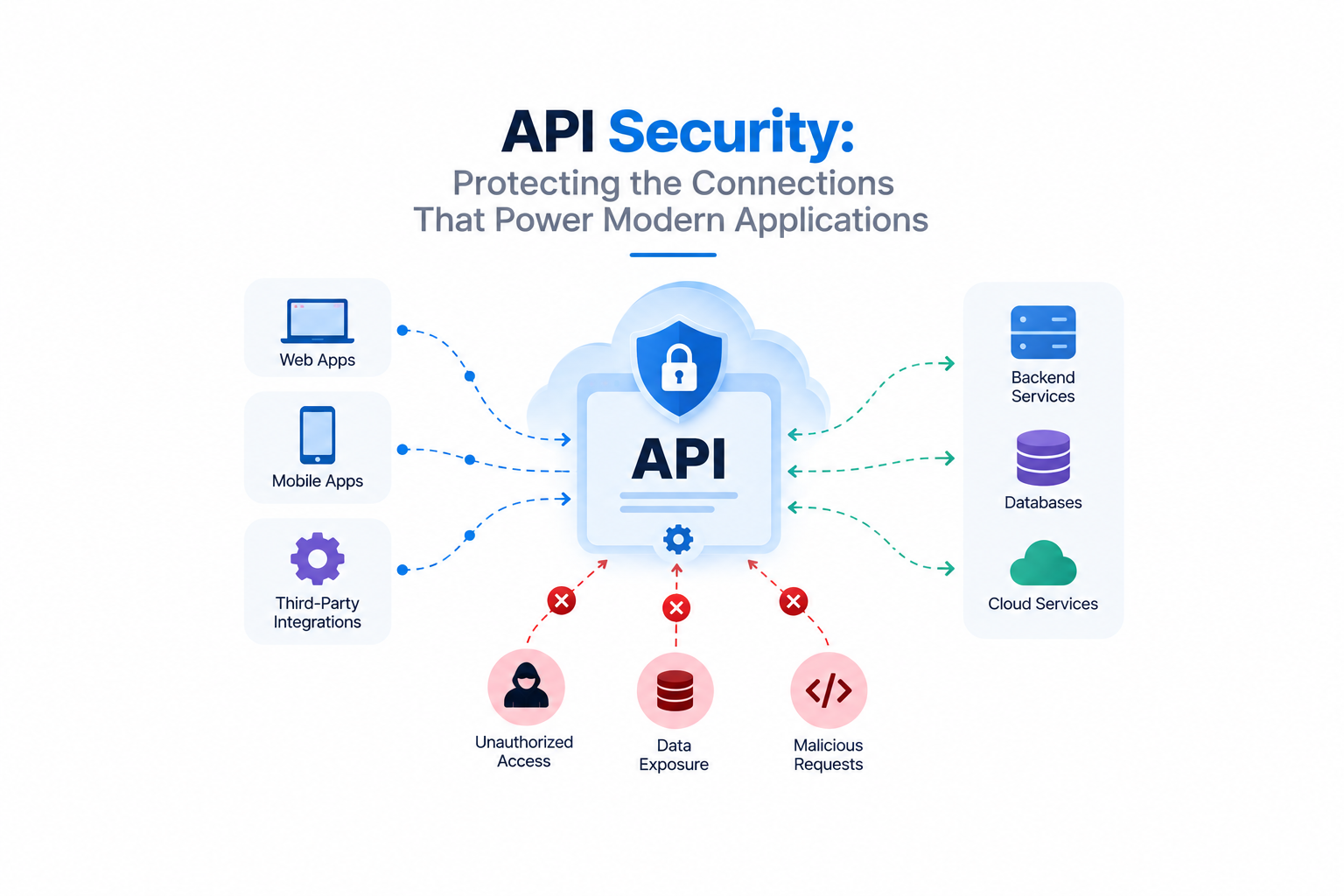
An API can expose a small piece of application functionality or provide access to an entire business workflow. That makes APIs valuable to attackers as well as developers.
Modern applications rarely operate as isolated systems. Mobile apps communicate with backend services, web applications exchange data with
APIs, and internal services depend on APIs to communicate with one another. Third-party integrations add another layer of connectivity.
The result is an attack surface that can change quickly and may be difficult to see from traditional application security controls alone.
Why APIs Have Become a Security Priority
APIs are designed to provide access. Every endpoint, parameter, authentication mechanism, and data response creates another part of that access model.
The challenge is not simply knowing that an API exists. Security teams need to understand:
- Which APIs are exposed externally?
- What data does each API return?
- Who can access specific endpoints?
- Which APIs are still actively used?
- Are older versions still available?
- What happens when users manipulate requests or parameters?
An API that exposes customer records, financial information, or administrative functionality deserves very different attention from an endpoint that returns non-sensitive information.
This is why API security needs to be considered as an ongoing security discipline rather than a one-time application review.
Where API Security Can Fail
API security problems often occur when the intended business logic differs from what the API actually allows.
For example, an application may correctly authenticate a user but fail to verify whether that user is authorized to access a particular object. An attacker could manipulate an identifier in a request and attempt to access another user's information.
Other problems can arise from excessive data exposure, weak input validation, insecure API configurations, undocumented endpoints, or outdated API versions.
Authentication itself can also create weaknesses. An API may require users to log in while still using poorly protected tokens, weak authorization rules, or inconsistent access controls.
Authentication Is Only One Layer
It is easy to treat authentication as the main API security control. It is not.
Authentication answers “Who are you?” Authorization answers “What are you allowed to do?”
An API can have strong authentication and still expose sensitive functionality if authorization is poorly implemented.
Security teams should therefore examine how identities, roles, permissions, tokens, and individual resources are handled across the API lifecycle. For a deeper look at this layer, see API authentication.
APIs Change Faster Than Security Documentation
API inventories can become outdated quickly.
Development teams may introduce new endpoints, modify existing functionality, release a new version, or connect an API to another service without security documentation keeping pace.
This creates a practical visibility problem. An organization may believe it knows which APIs are exposed while an older, forgotten, or undocumented endpoint remains accessible.
API discovery should therefore be treated as an ongoing activity. Security teams should understand where APIs are deployed, who owns them, what data they handle, and whether they are still required.
Testing APIs Before Attackers Find the Weakness
API testing should go beyond checking whether an endpoint responds correctly.
Security testing can examine authentication, authorization, input handling, error responses, business logic, rate controls, and unexpected request behavior.
Testing is particularly valuable when APIs are being developed or significantly changed. Finding a weakness before deployment is generally easier than investigating it after an attacker has discovered it.
Teams can explore API security testing for a deeper look at how testing fits into API protection.
A Practical API Security Approach
A useful API security program should combine visibility, secure development, access control, monitoring, and testing.
Security teams should:
- Maintain an accurate inventory of APIs and owners.
- Identify which endpoints are externally accessible.
- Classify the data and functionality exposed through APIs.
- Enforce authentication and authorization consistently.
- Remove or restrict unnecessary endpoints and older versions.
- Test APIs during development and before significant releases.
- Monitor API activity for unusual access patterns.
- Review third-party integrations and their permissions.
- Coordinate API security with development and application teams.
The most effective approach is continuous. APIs change as applications change, so security controls and visibility need to change with them.
Conclusion
APIs have become a core part of modern application architecture, but every connection introduces another point where access, data, and business logic must be protected.
Strong API security starts with knowing what exists and understanding what each API can expose. From there, organizations can combine authentication, authorization, testing, monitoring, and lifecycle management to reduce the risk of API-driven attacks.
About the Author

Nilesh Tank
Nilesh Tank is a VAPT Lead focused on penetration testing, vulnerability management, attack simulation, and offensive security. His expertise spans identifying security weaknesses and improving organizational security posture through proactive testing.
Is your Cyber Security 2026-Ready?
Stop ransomware and mitigate risks before they happen. Get a free architecture audit from our frontline security analysts.
Schedule a Strategy Call