The Hidden Risk of Deploying AI Without Security Oversight
 Humam Pathan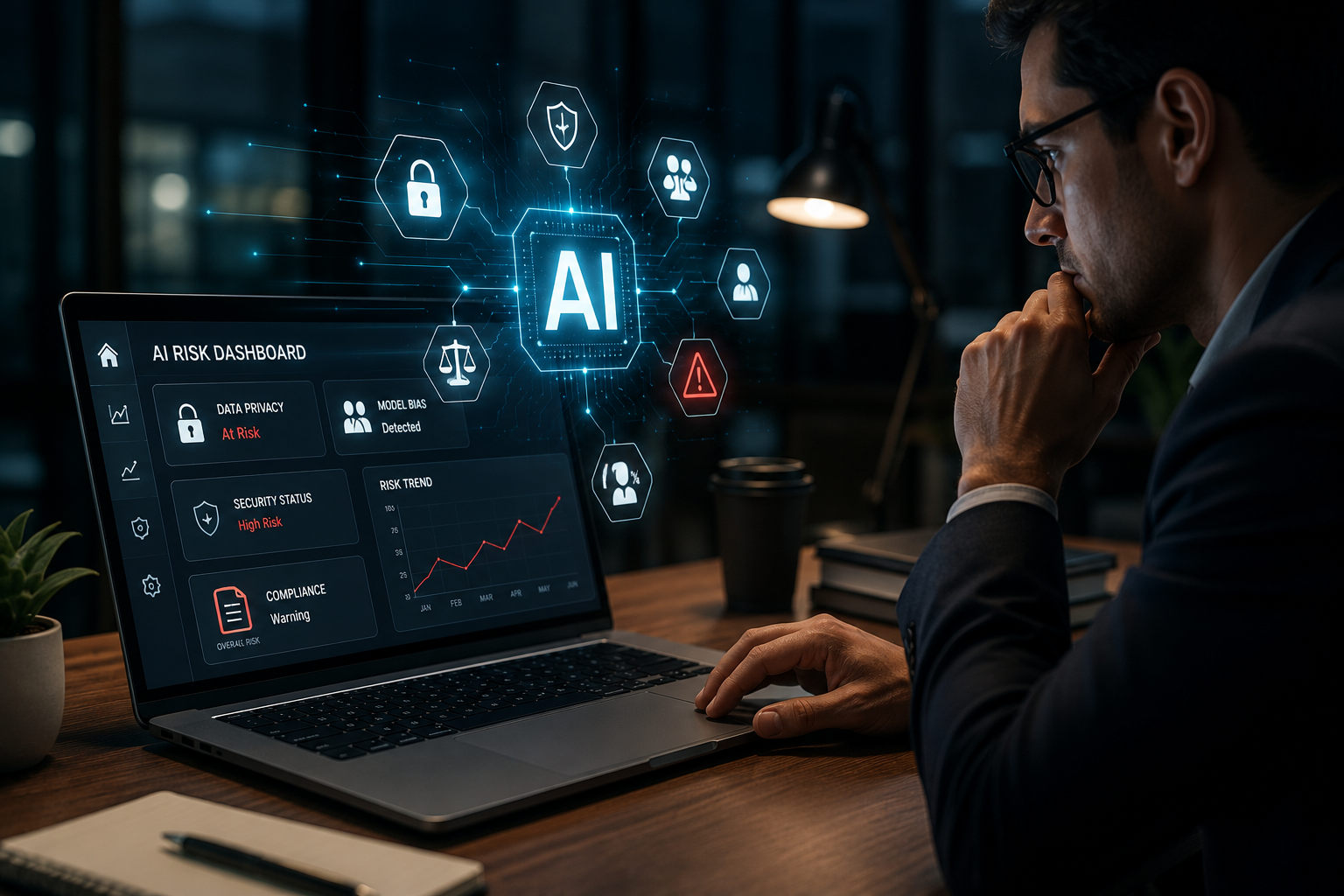
Artificial Intelligence (AI) is transforming the way businesses operate. From automating routine tasks and improving customer experiences to strengthening cybersecurity, AI is helping organizations become more efficient and productive.
However, as businesses rush to adopt AI, one critical aspect is often overlooked-security oversight.
Many organizations focus on what AI can achieve but pay less attention to how it should be monitored, governed, and secured. Without proper oversight, AI can introduce new security risks, expose sensitive data, and create compliance challenges that may not be immediately visible.
According to the World Economic Forum's Empowering Defenders: AI for Cybersecurity (2026) report, successful AI adoption depends on more than advanced technology. Organizations also need strong governance, responsible AI practices, and continuous human oversight to ensure AI is used safely and effectively.
AI Is a Powerful Tool-But It Needs Guardrails
AI has the ability to process enormous amounts of data, identify patterns, and automate complex tasks much faster than humans. These capabilities help organizations improve productivity and respond to cyber threats more efficiently.
But AI is only as reliable as the data, processes, and controls behind it.
If AI systems are deployed without proper oversight, organizations may not fully understand how decisions are made, what data is being processed, or whether sensitive information is adequately protected.
Without clear visibility, small issues can quickly become major security risks.
What Can Go Wrong Without Security Oversight?
When AI operates without proper governance, several challenges can arise.
Organizations may face:
- Unauthorized access to sensitive information.
- AI systems making inaccurate or biased decisions.
- Exposure of confidential business data.
- Lack of accountability for AI-generated actions.
- Difficulty meeting regulatory and compliance requirements.
These risks do not necessarily come from AI itself. Instead, they often result from deploying AI without clear policies, monitoring, and human review.
Why Human Oversight Still Matters
One of the key messages from the World Economic Forum report is that AI should augment human expertise-not replace it.
AI can analyze large datasets and identify unusual patterns far more quickly than humans. However, it cannot fully understand business priorities, ethical considerations, or organizational context.
Human oversight ensures that AI-generated recommendations are reviewed, validated, and aligned with business objectives before important decisions are made.
This combination of intelligent automation and human judgment creates more reliable and trustworthy AI systems.
Building Secure and Responsible AI
Organizations should treat AI as part of their overall cybersecurity strategy rather than as a standalone technology.
A secure AI program includes:
- Clear governance and accountability.
- Continuous monitoring of AI systems.
- Protection of sensitive data.
- Regular security assessments.
- Responsible AI policies and employee awareness.
By integrating these practices into everyday operations, organizations can reduce risks while confidently embracing AI-driven innovation.
Security Is a Shared Responsibility
Deploying AI securely requires collaboration across multiple teams.
Cybersecurity professionals protect systems and data.
Compliance teams ensure regulatory requirements are met.
Business leaders define responsible AI strategies.
Employees contribute by using AI tools responsibly and following organizational policies.
When these groups work together, organizations create a stronger foundation for secure AI adoption.
Conclusion
Artificial Intelligence can unlock tremendous business value, but without proper security oversight, it can also introduce hidden risks that impact security, compliance, and trust. By combining responsible AI governance, continuous monitoring, and proactive risk management, organizations can confidently adopt AI while staying resilient against evolving threats. Discover how our CXO Risk platform helps organizations identify, assess, and manage AI-related risks, enabling smarter decisions and stronger cyber resilience.
About the Author
Is your Cyber Security 2026-Ready?
Stop ransomware and mitigate risks before they happen. Get a free architecture audit from our frontline security analysts.
Schedule a Strategy Call