AI Is Helping Both Attackers and Defenders – Here's the Real Difference
 Nilesh Tank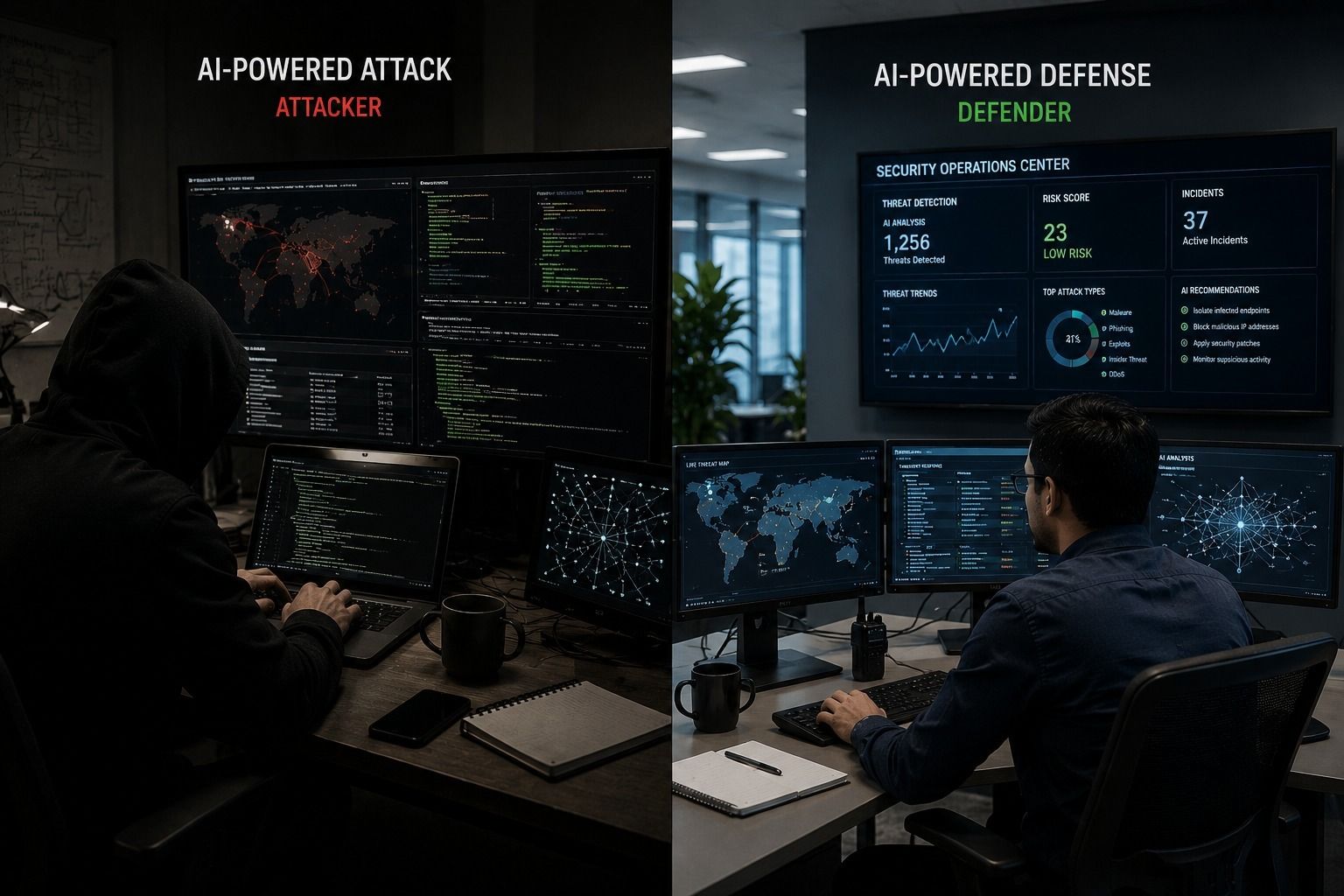
Artificial Intelligence (AI) is transforming cybersecurity at an incredible pace. It is helping organizations detect cyber threats faster, automate repetitive tasks, and strengthen their defenses. But there's another side to the story-cybercriminals are also using AI to make their attacks faster, smarter, and more convincing.
At first glance, it may seem like both sides are equally benefiting from AI. So, what makes the real difference?
The answer isn't just the technology-it's how AI is used.
Attackers Are Using AI to Scale Their Attacks
In the past, launching a cyberattack often required technical expertise and a significant amount of time. Today, AI has lowered that barrier.
Cybercriminals can use AI to:
- Generate convincing phishing emails
- Automate vulnerability research
- Analyze publicly available information
- Personalize attacks on a much larger scale
Tasks that once took hours can now be completed in minutes, allowing attackers to target more organizations with greater efficiency.
Instead of replacing cybercriminals, AI acts as a force multiplier, helping them work faster and reach more potential victims.
Defenders Are Using AI to Stay Ahead
Fortunately, AI is also giving cybersecurity teams powerful new capabilities.
According to the World Economic Forum's Empowering Defenders: AI for Cybersecurity (2026) report, organizations are increasingly using AI to improve phishing detection, identify unusual network behavior, analyze user activity, and accelerate incident response. AI helps security teams process enormous amounts of security data that would be impossible to review manually.
Rather than replacing cybersecurity professionals, AI allows them to focus on complex investigations and strategic decision-making while routine tasks are handled automatically.
The Real Difference Is Human Judgment
Although both attackers and defenders have access to AI, they do not operate under the same conditions.
Attackers can experiment quickly, ignore ethical boundaries, and constantly adapt their techniques.
Defenders, on the other hand, must protect sensitive information, comply with regulations, and ensure that AI systems are accurate, transparent, and trustworthy.
This is why the World Economic Forum emphasizes that AI should augment human expertise-not replace it. AI can detect patterns and recommend actions, but people are still responsible for evaluating risks, understanding business context, and making critical security decisions.
Building Smarter Cyber Defenses
Successful cybersecurity is no longer about choosing between humans and AI. It is about combining the strengths of both.
- AI-powered security tools
- Employee skills and continuous learning
- Responsible AI governance
A well-trained workforce can recognize suspicious activity, verify unusual requests, and make informed decisions when AI alone cannot provide the complete picture.
This balanced approach creates stronger, more resilient cybersecurity.
Final Thoughts
Artificial Intelligence is changing the cybersecurity landscape for everyone. Attackers are using it to automate and scale their attacks, while defenders are using it to detect threats faster and respond more effectively.
The real advantage does not come from simply having AI-it comes from using it responsibly. Organizations that combine AI with skilled professionals, clear governance, and continuous learning are better prepared to face today's evolving cyber threats.
In the end, AI is a powerful tool. Whether it strengthens security or creates new risks depends on the people who use it.
About the Author
Nilesh Tank
Nilesh Tank is a VAPT Lead focused on penetration testing, vulnerability management, attack simulation, and offensive security. His expertise spans identifying security weaknesses and improving organizational security posture through proactive testing.
Is your Cyber Security 2026-Ready?
Stop ransomware and mitigate risks before they happen. Get a free architecture audit from our frontline security analysts.
Schedule a Strategy Call