Never Trust, Always Verify: Why Zero Trust Is the Future of Cybersecurity
 Uzair Nalbandh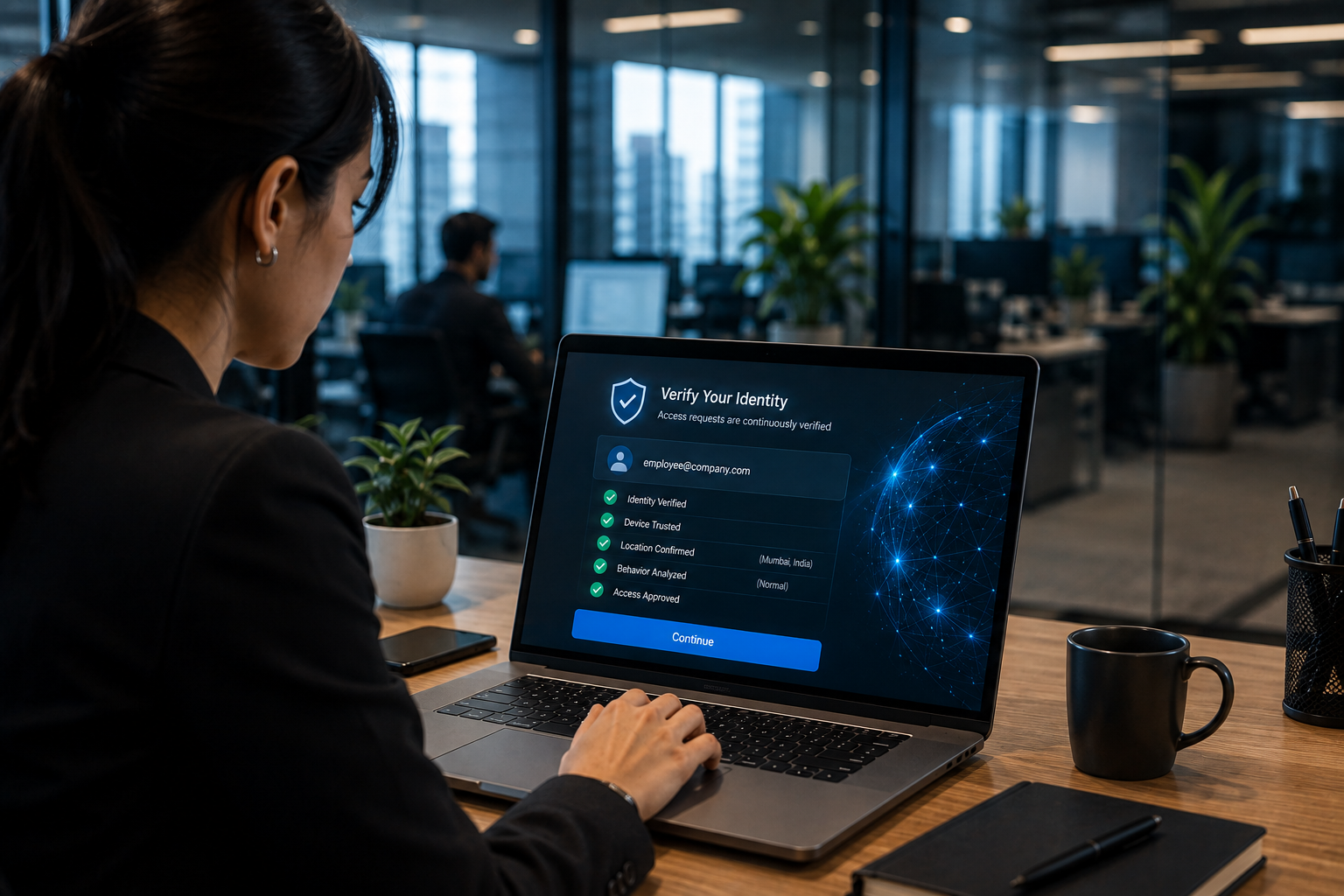
Imagine someone walks into your office wearing an employee ID badge. Would you automatically trust them to access every room, every system, and every piece of sensitive information?
Probably not.
Yet, for many years, traditional cybersecurity worked in a similar way. Once a user successfully logged into a company's network, they were often trusted to move freely across systems with minimal verification. This approach worked when businesses operated from a single office and employees accessed applications from company-managed devices.
Today's digital world is very different.
With cloud computing, remote work, mobile devices, and Artificial Intelligence (AI), employees now access business applications from anywhere. At the same time, cybercriminals are increasingly targeting user identities rather than trying to break through firewalls. This is why organizations are moving toward a security model known as Zero Trust.
What Is Zero Trust?
Zero Trust is built on one simple principle:
"Never trust, always verify."
Instead of assuming that a user or device is trustworthy simply because it is inside the company network, Zero Trust continuously verifies every access request before granting permission.
In other words, trust is never permanent-it must be earned every time.
Why Traditional Security Is No Longer Enough
Traditional security followed the idea of:
"You're inside the network, so you're trusted."
Unfortunately, attackers have learned how to exploit this model.
If a cybercriminal steals an employee's login credentials or compromises a trusted device, they may gain access to sensitive systems without immediately triggering security alerts.
Zero Trust reduces this risk by continuously validating:
- User identity
- Device health
- Location
- Access permissions
- User behavior
- Requested resources
Only after these checks are completed is access granted.
AI Is Making Zero Trust Even Smarter
Artificial Intelligence is helping organizations strengthen Zero Trust by continuously monitoring user activity and identifying unusual behavior.
For example, if an employee usually logs in from Mumbai during business hours but suddenly attempts to access sensitive systems from another country late at night, AI can recognize the unusual behavior and alert security teams.
Instead of relying on a single login, AI continuously evaluates risk throughout the user's session.
This helps organizations detect compromised accounts much faster.
Security Without Slowing Business
Some people believe Zero Trust makes work more difficult.
In reality, modern Zero Trust solutions work quietly in the background.
Employees continue working normally, while security systems continuously verify identities and monitor risk.
Only when something unusual occurs does additional verification become necessary.
This creates stronger security without disrupting productivity.
Conclusion
As organizations continue adopting cloud services, remote work, and AI-powered technologies, the traditional "trust once, verify never" approach is no longer enough. Zero Trust replaces assumptions with continuous verification, ensuring that every user, device, and access request is evaluated before sensitive resources are accessed.
Building a Zero Trust strategy isn't just about deploying new security tools-it's about protecting identities, reducing risk, and strengthening business resilience. Discover how our AI-powered Security Operations Center (SOC) platform helps organizations monitor identity-based threats, detect suspicious activity in real time, and respond quickly to emerging cyber risks through continuous security monitoring and intelligent threat detection.
About the Author
Uzair Nalbandh
Uzair Nalbandh is an IT Lead specializing in enterprise infrastructure, operational security, technology strategy, and cyber resilience. He shares insights on building and managing secure, scalable, and resilient IT environments.
Is your Cyber Security 2026-Ready?
Stop ransomware and mitigate risks before they happen. Get a free architecture audit from our frontline security analysts.
Schedule a Strategy Call